当研究室の研究は、分子をつくるための新しい方法や考え方を開拓する基盤研究です。医薬品、農薬、機能性材料などの性質は、分子構造に大きく左右されます。そのため、目的とする分子を効率よく、狙った構造で合成する技術は、化学全体を支える重要な基盤となります。
当研究室では、ランタノイドや遷移金属が示す元素固有の特徴に加え、可視光などの物理エネルギーを活用し、有機分子を効率よく、選択的につくる触媒系の開発に取り組んでいます。触媒は、反応を進みやすくするだけでなく、どの結合をつくるか、どの生成物や異性体を選択的に与えるかを制御する道具でもあります。さらに計算化学を組み合わせることで、実験結果の背後にある「なぜそうなるのか」を分子レベルで理解することを目指しています。
Our research is basic science aimed at expanding the methods and concepts available for molecular synthesis. The properties of pharmaceuticals, agrochemicals, and functional materials are strongly governed by molecular structure. Technologies that enable the efficient and precise synthesis of target molecules therefore provide an essential foundation for the chemical sciences.
We develop catalytic systems for the efficient and selective synthesis of organic molecules by harnessing the element-specific properties of lanthanides and transition metals, as well as physical energy sources such as visible light. Catalysts not only accelerate reactions; they also serve as tools for controlling which bonds are formed and which products or stereoisomers are obtained. We also integrate computational chemistry to understand, at the molecular level, the mechanisms behind our experimental observations.
ランタノイドを用いた触媒反応開発 / Lanthanide Catalysis
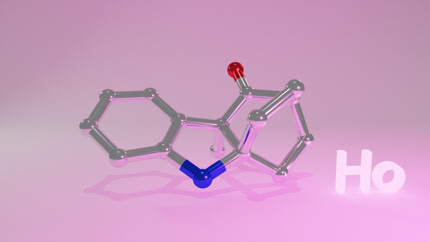
ランタノイドは酸素原子を含む分子と相互作用しやすく、比較的大きな金属イオンであるため、複数の分子を同時に近接配置できる可能性があります。このような特徴を活かし、ランタノイドならではの反応性と選択性を引き出す触媒反応の開発に取り組んでいます。
Lanthanides interact strongly with oxygen-containing molecules, and their relatively large ionic radii can help organize multiple substrates in close proximity. We exploit these features to develop catalytic reactions that draw on the distinctive reactivity and selectivity of lanthanide elements.
オートタンデム触媒系の開発 / Auto-Tandem Catalysis
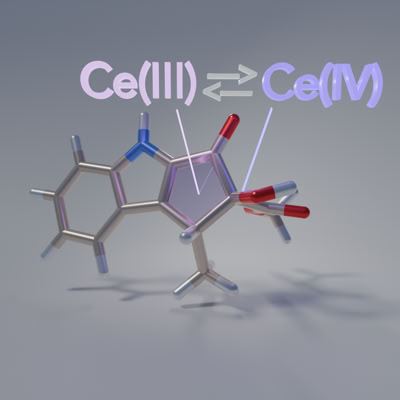
一つの触媒系で複数の異なる反応を連続的に進行させ、廃棄物の発生を抑える触媒反応を設計しています。セリウムをはじめとする豊富に存在し比較的扱いやすい元素を活用し、貴金属に依存しない合成プロセスの構築をめざしています。
We design catalytic systems in which a single catalyst promotes multiple, distinct transformations in sequence, thereby reducing waste. By exploiting abundant and comparatively benign elements such as cerium, we aim to establish synthetic processes that do not rely on precious metals.
光エネルギーを利用した分子変換 / Photochemistry
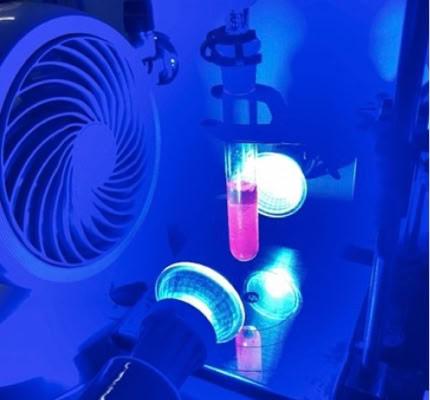
LEDは特定波長の光を効率よく発生できるため、反応に与えるエネルギーを選択できます。光エネルギーを活用することで、熱や試薬だけでは困難な分子変換の実現をめざしています。
LEDs provide light at defined wavelengths, allowing us to choose the energy delivered to a reaction. By harnessing light energy, we pursue molecular transformations that are difficult or inaccessible using heat or chemical reagents alone.
計算化学・機械学習を活用した反応開発 / Computation- and Data-Driven Reaction Discovery
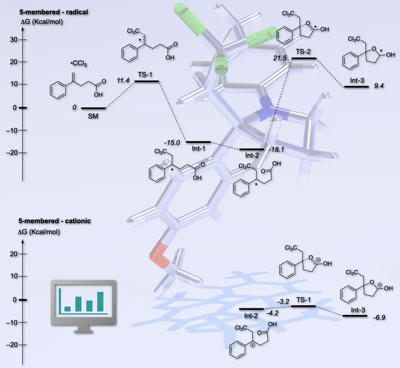
量子化学計算によって反応機構を解明し、機械学習を用いて有望な触媒や反応条件を予測します。実験・理論・データ科学を組み合わせることで、反応開発を加速します。
We use quantum chemical calculations to elucidate reaction mechanisms and machine learning to identify promising catalysts and reaction conditions. By integrating experiment, theory, and data science, we accelerate reaction discovery.